
People

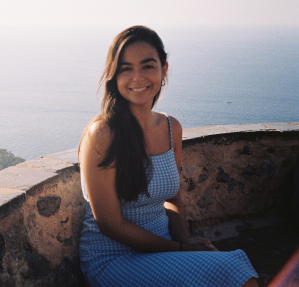
María Martínez García
Saarland Informatics Campus
Building E1.1, Room 2.26
About me
I am a Postdoctoral Researcher in Prof. Isabel Valera’s group in Saarland University since January 2025. I hold a degree in Telecommunications Engineering from Vigo University and a Master’s in Machine Learning applied to Health from University Carlos III in Madrid (UC3M). In 2024, I completed my Ph.D. in Probabilistic Machine Learning applied to Personalized Medicine and Genetics at UC3M, under the supervision of Assoc. Prof. Pablo M. Olmos. During my Ph.D., I also worked as a predoctoral researcher at the Instituto de Investigación Sanitaria Gregorio Marañón (IiSGM) with Dr. Carolina Martínez Laperche, supported by the Intramural Grant.
My research focuses on developing probabilistic machine learning methods for representation learning and dimensionality reduction, particularly in analyzing complex, high-dimensional data with continuous and discrete Variational Autoencoders. Throughout my Ph.D., I combined theoretical and applied research, aiming to bridge the gap between machine learning advancements and real-world clinical applications. This approach allowed me to tackle medical challenges while contributing to machine learning methodology. Now, my focus is on further improving these methods to develop models that are flexible, interpretable and robust.
Publications
2026
Vo, Huyen; Martı́nez-Garcı́a, Marı́a; Valera, Isabel
Holder++: Improving the Quality-Coherence Trade-off in Multimodal VAEs Proceedings Article
In: 2026.
Abstract | Links | BibTeX | Tags: huyen, isabel, maria
@inproceedings{nokey,
title = {Holder++: Improving the Quality-Coherence Trade-off in Multimodal VAEs},
author = {Huyen Vo and Marı́a Martı́nez-Garcı́a and Isabel Valera},
url = {https://vothuckhanhhuyen.github.io/assets/pdf/Holder_ICML2026.pdf},
year = {2026},
date = {2026-03-11},
urldate = {2026-03-11},
abstract = {Existing approaches for multimodal variational autoencoders (VAEs) face a trade-off between generative quality and coherence—i.e., they struggle to generate realistic and diverse samples that, at the same time, are semantically consistent across modalities. A recent work shows that using a simple approximation to Hölder pooling as an aggregation method improves coherence over the SOTA MMVAE+, despite assuming a single shared representation across all modalities. Yet, it slightly compromises sample diversity. Inspired by this insight, we propose Hölder++, a novel multimodal VAE that improves the generative quality-coherence trade-off through: (i) the first implementation of Hölder pooling without any approximation for multimodal VAEs; (ii) an extended architecture that models distinct shared and private (i.e., modality-specific) representations (Hölder+); and (iii) hierarchical inference that further enhances the disentanglement between the shared and private representations (Hölder++). Our experiments corroborate that Hölder++ consistently improves the generative quality-coherence trade-off, yields more structured latent spaces, and learns shared representations that are informative for downstream tasks.},
keywords = {huyen, isabel, maria},
pubstate = {published},
tppubtype = {inproceedings}
}
Martínez-García, María; Alvarez, Ricardo Vazquez; Lancho, Alejandro; Olmos, Pablo M.; Valera, Isabel
A Probabilistic Hard Concept Bottleneck for Steerable Generative Models Proceedings Article
In: The Fourteenth International Conference on Learning Representations, 2026.
Abstract | Links | BibTeX | Tags: isabel, maria, pablo, saml
@inproceedings{<LineBreak>martinez-garcia2026a,
title = {A Probabilistic Hard Concept Bottleneck for Steerable Generative Models},
author = {María Martínez-García and Ricardo Vazquez Alvarez and Alejandro Lancho and Pablo M. Olmos and Isabel Valera},
url = {https://openreview.net/forum?id=Kcb6WufAco},
year = {2026},
date = {2026-01-01},
urldate = {2026-01-01},
booktitle = {The Fourteenth International Conference on Learning Representations},
abstract = {Concept Bottleneck Generative Models (CBGMs) incorporate a human-interpretable concept bottleneck layer, which makes them interpretable and steerable. However, designing such a layer for generative models poses the same challenges as for concept bottleneck models in a supervised context, if not greater ones. Deterministic mappings from the model inner representations to soft concepts in existing CBGMs: (i) limit steerable generation to modifying concepts in existing inputs; and, more importantly, (ii) are susceptible to concept leakage, which hinders their steerability. To address these limitations, we first introduce the Variational Hard Concept Bottleneck (VHCB) layer. The VHCB maps probabilistic estimates of binary latent variables to hard concepts, which have been shown to mitigate leakage. Remarkably, its probabilistic formulation enables direct generation from a specified set of concepts. Second, we propose a systematic evaluation framework for assessing the steerability of CBGMs across various tasks (e.g., activating and deactivating concepts). Our framework which allows us to empirically demonstrate that the VHCB layer consistently improves steerability.},
keywords = {isabel, maria, pablo, saml},
pubstate = {published},
tppubtype = {inproceedings}
}
Vo, Huyen; Martínez-García, María; Valera, Isabel
Hölder++: Improving the Quality-Coherence Trade-off in Multimodal VAEs Miscellaneous
2026.
Abstract | Links | BibTeX | Tags: huyen, isabel, maria, saml
@misc{vo2026holderimprovingqualitycoherencetradeoff,
title = {Hölder++: Improving the Quality-Coherence Trade-off in Multimodal VAEs},
author = {Huyen Vo and María Martínez-García and Isabel Valera},
url = {https://arxiv.org/abs/2606.13381},
year = {2026},
date = {2026-01-01},
urldate = {2026-01-01},
abstract = {Existing approaches for multimodal variational autoencoders (VAEs) face a trade-off between generative quality and coherence-i.e., they struggle to generate realistic and diverse samples that, at the same time, are semantically consistent across modalities. A recent work shows that using a simple approximation to Hölder pooling as an aggregation method improves coherence over the SOTA MMVAE+, despite assuming a single shared representation across all modalities. Yet, it slightly compromises sample diversity. Inspired by this insight, we propose Hölder++, a novel multimodal VAE that improves the generative quality-coherence trade-off through: (i) the first implementation of Hölder pooling without any approximation for multimodal VAEs; (ii) an extended architecture that models distinct shared and private (i.e., modality-specific) representations (Hölder+); and (iii) hierarchical inference that further enhances the disentanglement between the shared and private representations (Hölder++). Our experiments corroborate that Hölder++ consistently improves the generative quality-coherence trade-off, yields more structured latent spaces, and learns shared representations that are informative for downstream tasks.},
keywords = {huyen, isabel, maria, saml},
pubstate = {published},
tppubtype = {misc}
}
2025
Martínez-García, María; Villacrés, Grace; Mitchell, David; Olmos, Pablo M
Improved Variational Inference in Discrete VAEs using Error Correcting Codes Proceedings Article
In: The 41st Conference on Uncertainty in Artificial Intelligence, 2025.
Abstract | Links | BibTeX | Tags: maria
@inproceedings{martinezimproved,
title = {Improved Variational Inference in Discrete VAEs using Error Correcting Codes},
author = {María Martínez-García and Grace Villacrés and David Mitchell and Pablo M Olmos},
url = {https://proceedings.mlr.press/v286/martinez-garcia25a.html},
year = {2025},
date = {2025-01-01},
urldate = {2025-01-01},
booktitle = {The 41st Conference on Uncertainty in Artificial Intelligence},
abstract = {Despite advances in deep probabilistic models, learning discrete latent representations remains challenging. This work introduces a novel method to improve inference in discrete Variational Autoencoders by reframing the inference problem through a generative perspective. We conceptualize the model as a communication system, and propose to leverage Error-Correcting Codes (ECCs) to introduce redundancy in latent representations, allowing the variational posterior to produce more accurate estimates and reduce the variational gap. We present a proof-of-concept using a Discrete Variational Autoencoder with binary latent variables and low-complexity repetition codes, extending it to a hierarchical structure for disentangling global and local data features. Our approach significantly improves generation quality, data reconstruction, and uncertainty calibration, outperforming the uncoded models even when trained with tighter bounds such as the Importance Weighted Autoencoder objective. We also outline the properties that ECCs should possess to be effectively utilized for improved discrete variational inference.},
keywords = {maria},
pubstate = {published},
tppubtype = {inproceedings}
}
